Sunday, 19 July 2026

Strangers by Belle Burden

I told myself to be graceful, told myself not to say too much.  I put on my summer dresses. I went to cocktail parties. I did 'tide rides' in the Vineyard Sound and group walks in Chilmark.  I bought hostess gifts.  I smiled at my dinner partners.  I made small talk on the pier about the weather, about the kids, as I stood there, in my bathing suit, alone among the married couples, wanting to die.

In June 2023 Belle Burden publishes an essay in Modern Love the long- standing New York Times column about relationships. It's the story of how her husband of twenty years leaves her for a younger woman and inexplicably wants minimal contact with their three children.  After publication she goes out onto the lawn of her home at Martha's vineyard and sees a huge swarm of dragonflies.  Fearing this is an ominous sign she Googles dragonflies and discovers that they represent self-actualisation.

This elegantly written memoir evolved from the essay.  She is utterly blind-sided by her husband's affair and his cold mocking of her: "Boo-hoo. Poor Belle. Always the victim."  Of course this is only one side of the story but a depressingly familiar one.  Most friends and family rally to support her. Some don't.  

And I felt a deep sense of embarrassment about it, James was the one who walked out but the shame had become mine.  I had made it mine.  I was an abandoned wife, a woman rejected by her husband, a woman who had failed to keep her family together.  I would be the outsider among all the married people, all the intact families, all the women who were wanted by their husbands.

So how does Belle rebuild her life?  She does, of course, come from a privileged background  descended from the Vanderbilts and her grandmother, Grace Paley was one of Truman Capote's coterie of glamorous 'Swans.'  But money does not keep pain and humiliation from our lives.  She finds that walking through it helps.  Eight miles every day through sun, rain and hail until her boots are dusted white with saltwater. She searches for sea glass in the wet sand, meticulously collecting only the completely smooth coloured glass and keeping it in a jar by the door.

She even finds herself enjoying having lots of her daughters' friends over who eat snacks, watch TV, swim in the pool and play loud music. 

I was always wary of a crowd, of things getting out of control, of messes. But in my new state, I loved it, It made me feel good, all that happiness and noise and chaos.

This beautifully written memoir begins and ends with ospreys returning to the same nest on Martha's Vineyard. The ospreys nesting, migration and return recur throughout the memoir.  However I think it is the dragonflies - symbolic of lightness and resilience - who really represent this story.

Friday, 26 June 2026

Whistler, Yesteryear and Fly Wild Swans

I very much enjoyed Ann Patchett's new novel Whistler particularly the allegorical tale about the lovely horse.  I can't be the only reader who thought the story was heading towards a romance between the adult Daphne and her stepfather, can I?  It took a different twist but I wonder if it might have had a more exciting ending if there had been an illicit liaison.

Perhaps my mind has taken a dark turn after reading Yesteryear by Caro Claire BurkeIt's a twisted satire with very black humour.  I'm too old to be following trad wife or homestead vloggers but I got the general idea.  For some reason the writing reminded me a little of Donna Tartt.  I kept turning the pages but the ending was confusing - presumably to reflect central character's Natalie's psychotic state - not sure that it worked.

I loved Wild Swans - Three Daughters of China when it was first published in the 1991.  Can it be that long ago?  Jung Chang's new book, dedicated to her mother, was published this year.  I started Fly Wild Swans a couple of months ago but just didn't find the same magic in the writing,  I will try again.  Anyone read it?

Friday, 29 May 2026

The Invention of Charlotte Bronte

1850.  During a summer thunderstorm Elizabeth Gaskell travelled on a steam train through torrential rain.  She disembarked at Windemere in the Lake District to stay with aristocratic friends and it was there that she met the enigmatic Currer Bell, author of the literary sensation Jane Eyre.  

A lifelong friendship began and Elizabeth's cheerful extrovert personality helped to ease Charlotte's solitude and the strain of looking after her difficult father.  Elizabeth's own literary success and influence also aided Charlotte but you do get the impression that the famous Mrs Gaskell was a bit gossipy and always had one eye on opportunites for herself.  Arguably, it was her pushiness that enabled her to pull together her remarkable biography after Charlotte's death, cajoling Charlotte's friends and family into giving up their private correspondence, enlisting her own daughters in copying the letters out and finding the stamina to work long hours to complete the work.  Needless to say she also secured herself a good pay deal!  

The Invention of Charlotte Bronte has lots of interesting details but what I really loved was the description of Charlotte's wedding. 

On Friday 9th June a box tied shut with a cord came from a Halifax dressmaker.  Inside was a white muslin wedding dress and a lavender and silver silk 'going away' dress.  Chalotte, once so hungry for mail that she often read and responded to letters on the same day, knew as soon as she opened the box that that the material reality of her marriage would be in her hands.  She could not do it.

Charlotte, her husband-to-be and her father all became sick with nerves as the wedding date approached and on the evening before, cantankerous Patrick Bronte decided that he wouldn't be  attending and therefore would be unable to give her away.  Charlotte's friend and former teacher Margaret Wooler stepped in to give the bride away.  Ellen Nussey, Charlotte's close friend also attended and decorated the table with posies of wildflowers gathered by young servant, Martha.  Arthur Bell Nicholls walked over the moors to the church and Patrick finally decided to join them at the wedding breakfast.  

The parsonage had some modest decorations prior to the wedding as Arthur Bell Nicholls would live there with his new wife and a spare room is converted into a study for him. Graham Watson makes the poignant point that although Charlotte's husband and father both have a study 'the three great writers of that house' had to write wherever they could find a space.

I still don't think we have a definitive biography of Charlotte's life, we probably we need a biographer of the stature of Claire Tomalin.  However, I highly recommend this book.

Saturday, 28 March 2026

Speak To Me Of Home

At this late hour, all across the Puerto Rican archipelago, all that was left was to close the hurricane shutters if you were lucky enough to have them, to hunker down against the growing breeze and greening sky.  With a great suction of wind, the storm was coming.

Absolutely no sign of my Yellow Queen hyacinths yet, but I did enjoy my new spring read Speak to Me of Home by Jeanine Cummins purchased from Lucky Hare a new independent book shop near my home town.

I loved some of the descriptive writing particularly in the early chapters of this book.  For example when 22 year old Daisy is flying through the streets of San Juan on her scooter:

She loved balancing on the scooter with both accelerator and brakes in the grip of her hand.  She began to crave the rough stickiness of the board beneath the soles of her shoes, the warm wind whipping her T-shirt against her body, drying the sweat from her neck even when the sun shone on her outstretched arms. She enjoyed the reasonable speed, the ease of the velocity, how quickly the city blocks went by beneath her wheels.  She listened to flashes of laughter and the boom bass of reggaeton while she flew modestly through the streets.

I suppose the problem with a three generation saga is that as a reader you are more invested in some parts of the story than others.  I really liked Daisy and her mother Ruth and their kind of role reversal in that Daisy rejects technology, rarely using her cell phone and social media whereas her mother has a constant online presence. In Ruth's kitchen all the ingredients to make a cake are transferred to visually pleasing containers and jars:

Even the cardboard egg carton was long gone, its inhabitants re-nestled into a pale-blue porcelain tray that photographed beautifully against the white countertops.  And while grown- up Daisy found this rehoming of products to be slightly ridiculous, even she could admit that the aesthetic result was strangely soothing ...

A deeper rift has developed between mother and daughter, too.  While Ruth has seemingly jettisoned her Puerto Rican ancestry showing little interest in the Spanish language and living and working in New York, Daisy has moved to San Juan and feels a deep affinity with the city.

I was less invested in Rafaela, the grandmother's story but I liked the fictional account of a true episode from her childood.  In the 1950's popular Mayor Felisa Rincon de Gautier wanted Puerto Rican children to experience the magic of snow at Christmas  and imported it by plane from New Hampshire a 'mantle of freezing slush beneath a hot blue sky.'

A sweeping story with a surprise at the end.  For me the best part was the opening chapters wiith a gathering storm and the vivid sensory descriptions of a the scooters and street life in San Juan.

Daisy remembered one woman in a red evening gown and glittering high heels gliding down avenida Ashford behind her date, who was wearing a tux.  The woman's black hair was pulled into a sleek side-part pony, and the gauzy trail of her gown fanned out behind her scooter like a crimson wing.

Has anyone read American Dirt? 

Tuesday, 11 February 2025

The God of the Woods


 "Sixty-five percent of people, said Calvin, "are less than twenty feet from a trail when they first begin to feel disoriented."

Somehow it is seven months since I last posted a book review and that one was also about being lost in the woods!  I've not read Liz Moore before but The God of the Woods is a real page- turner which is probably why it is top of the New York Times fiction bestseller list.  I do love novels about woodcraft and forestry.  Set at a camp for youngsters in the Adirondacks the narrative moves backwards and forwards chronologically, with many characters and quite a few red herrings.  It reminded me a little of Meg Wolitzer's The Interestings which was also set in the 1970s at a camp for gifted teenagers called Spirit in the Woods.

The God in the Woods features a spectacularly crass and wealthy Adirondack family who own the camp and their teenage daughter Barbara who goes missing in the woods fifteen years after their eight year old son Bear disappeared.  For me the most enjoyable chapters centred around the camp itself and the engaging street-smart camp counsellor Louise.  I also liked misfit teenager Tracy who is experiencing the agonising pangs of unreciprocated first love.  With an escaped serial killer believed to be making his way north never has the camp's mantra WHEN LOST SIT DOWN AND YELL been more pertinent. 

if I have a minor quibble it seemed to me that one or two of the red herrings were not explained but Liz Moore has created a beautifully written literary thriller.  I loved this quote:

For a bonus, she asked them: Who knew the origins of the word?

"Which word?" someone said.

"Panic," said TJ. But no one raised a hand.

She explained. It came from the Greek god Pan: the god of the woods. He liked to trick people, to confuse and disorient them until they lost their bearings, and their minds.

Great cover and pink endpapers, too!  If you've read it you will know that the drip of fawn pink paint symbolises a certain scene in the book.  I would love to know your thoughts.

Saturday, 20 July 2024

Outback Noir

"You wouldn't want to be lost out there for too long.  It's the panic that gets you.  Everything starts to look the same After a few days, makes it hard to trust what you are seeing."  He glanced outside.  "Drives 'em wild."

I actually prefer Jane Harper's second novel Force of Nature to her highly acclaimed debut The Dry.  I just love the concept of five ill-matched female colleagues forced to spend a long weekend on a team-building hike in the remote Giralang Ranges in East Australia.  Brilliant opening chapter with the corresponding male team completing the hike and making it back to camp in plenty of time, drinking coffee, checking their phones and making jokes about the tardiness of the women's team.  As time moves on they become concerned.  The search team come in, confident of swiftly locating the women and bringing them out.  They return stone-faced as the light begins to fade.

Jane Harper's low-key, likeable detective Aaron Falk receives a disturbing voice mail from one of the women on the hike and also heads out to the Giralang Ranges recalling that the area was the scene of a notorious serial killer in his youth.  The five women are ill-equipped for hiking in the outback with hiking boots that don't fit and rucksacks with straps that chafe the skin. Not enough water, not enough food.  Courtesy and camaraderie breaks down under adversity and the five colleagues - all at different levels of seniority within their organisation - are reduced to scuffling over their only phone with a faint signal.

Jane Harper is good at the slow-burn plot and setting up red herrings among her characters.  What does the guy at the petrol station know? Who exactly is the man running the corporate events?  Is the woman known to have a drink and drugs problem too obvious a suspect?  As in The Dry the landscape itself adds a sense of foreboding -  a 'green sprawling mass of bushland' where you only have to walk a little way in any direction and it all starts to look the same.

While we're on the subject of outback noir let's not forget that other great novel by Colleen McCullough who was writing a love story set on a remote sheep shearing station in Drogheda, New South Wales back in 1977.   I've just reread The Thorn Birds and for me the most interesting part of the story is not the affair between Meggie and the priest but the gradual unfolding of the character of Fee, Meggie's strange silent mother.

Amidst the ghost gums, wilga trees, cockatoos and the silver grass of Drogheda, McCullogh brilliantly portrays how the climate controls life and work.

Any recommendations for further reading would be welcome!

Sunday, 28 April 2024

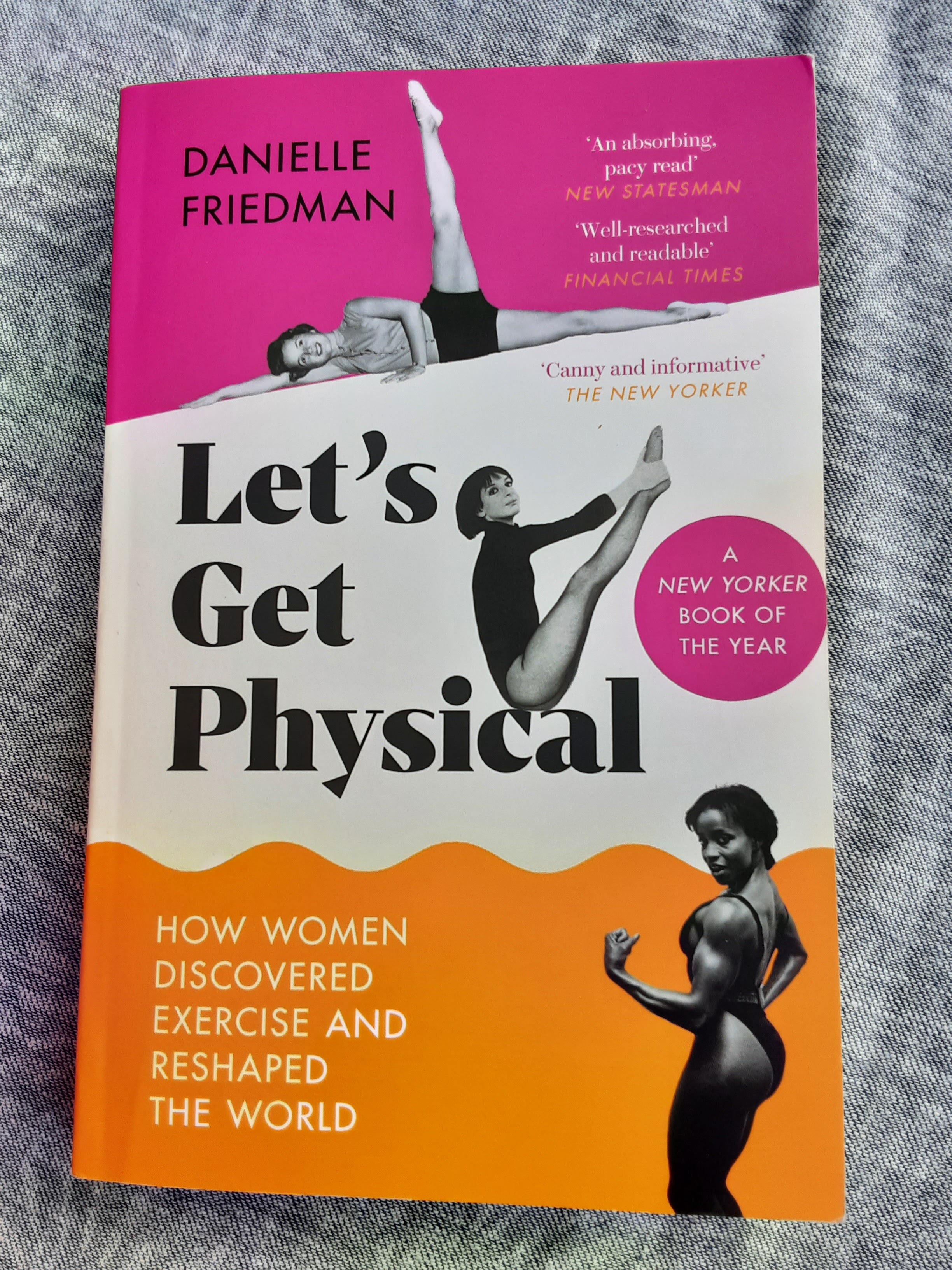
Let's Get Physical

 All right ladies. Are you ready? Let's go!

I enjoyed Danielle Friedman's account of the rise of women's exercise classes Let's Get Physical. It's organised into chapters with titles like Stretch, Bounce and Burn, etc each denoting a different exercise. The book covers women's ballet barre, Jazzercise, yoga, aerobics, running and weightlifting and I found some chapters more interesting than others.

My favourite was Burn which of course was Jane Fonda's 'go for the burn' phrase during the 1980s dance aerobics craze.  Incidentally this phrase was gradually dropped from the workout as doctors questioned the safety of it.  I used to think that the Jane Fonda workout was very glamorous but now it is available on YouTube it seems utterly insane!

Of course it's easy to laugh now at the leg warmers and hyper extended leg stretches but Friedman raises deeper questions. What was it that women found - and still do find - when they can get away from home, work and family for a couple of hours to exercise together?  The form of exercise may change but the joy, peace, well- being and strength to be found in communal exercise remains.

I didn't know that the Jane Fonda Workout Video was the first of its kind and sold 17 million copies.  Or that all the money went to fund her then husband's political campaign.  But she comes across as likeable and self-aware in this book.

As Friedman explains, the rise of women's exercise classes in the 1950s pioneered by Bonnie Prudden and Lottie Berk were routed in ballet.  Jane Fonda, too, was ballet trained but the popularity of the dance- based exercise class began to decline in the late 1980s.  Women were nursing injuries from overdoing it and were looking for a gentler and more spiritual form of exercise.

'Like a lotus flower rising from the mud' yoga began to peak in popularity in the 1990s.  Of course this ancient practice had always been around but was popularised in America by Indra Devi and the charismatic Lilias Folan who had a yoga television show Yoga and You in the 1970s beginning each episode with a reassuring voice.  Friedman describes feeling stressed with deadlines, work and family when interviewing Lilias Folan who is now 87 for the book and becomes tearful when Lilian reminds her to exhale. Suddenly I got it. So this is why women like yoga.  

 If I have any criticism of this book I would say that it is very US based.  As someone who has spent many years taking classes - aerobics, zumba, yoga - in chilly village halls and overcrowded dance studios a corresponding UK history of the women's exercise class would be interesting.

Friday, 1 March 2024

Breakfast at Tiffany's

I enjoyed Jenny Jackson's PIneapple Street and its 'old money' Brooklyn setting.  I was also intrigued by its epitaph - a quote from Truman Capote.  'I live in Brooklyn. By choice.'

I'd never actually read his famous novella Breakfast at Tiffany's and it's difficult to read without an image of Audrey Hepburn shimmering before you.  The Holly Golightly of the book is a rather less progressive young lady and at times is almost unlikeable.  I suppose when you consider her background, orphaned as a child and married at 14 before running away to become, let's say, an escort, her choices were limited.  The unnamed narrator is a much kinder character who brings out Holly's better self.

Of course, it's the quality of Truman Capote's beautifully descriptive prose that makes this book so good.  From the opening lines reminiscent of Scott Fitzgerald's The Great Gatsby you know that you are in the hands of a great writer.

She was still on the stairs, now she reached the landing and the ragbag colours of her boy's hair, tawny streaks, strands of albino blonde and yellow, caught the hall light.  It was a warm evening, nearly summer, and she wore a cool black dress, black sandals, a pearl choker.  For all her chic thinness, she had an almost breakfast-cereal air of health, a soap and lemon cleanness, a rough pink darkening in the cheeks.

A lot of the famous lines and images in the  1961 film come directly from the book; Holly sitting on the fire escape drying her hair in the sun and playing her guitar, her love of Tiffany's 'Nothing very bad could happen there'.  And of course her famous line about it being tacky to wear diamonds before you're 40!

Although written in 1958 it is actually set in 1943 during the war.  When Holly receives a telegram to say that her beloved brother has been killed the 'mean reds' (her words for depression) threaten to overwhelm her.

Certainly there are phrases and sentiments in the book which are unacceptable now but the story of a young writer's first Brooklyn apartment and his infatuation with a young women who lives in the apartment below and owns a ginger cat with a 'pirate's cut-throat face'  is utterly charming.

Outside, the rain had stopped, there was only a mist of it in the air, so I turned the corner and walked along the street where the brownstone stands.  It is a street with trees that in the summer make cool patterns on the pavement; but now the leaves were yellowed and mostly down.

Wednesday, 9 August 2023

Penguin Orange Classics - The Joy Luck Club

And I am sitting at my mother's place at the mah jong table, on the East where things begin.

Can't believe it is almost 35 years since The Joy Luck Club was published.  I was a young woman working in a library when this book came out (pre-internet and iphone) and I loved it then and have reread it many times over the years.  I had to treat myself to the Penguin Orange Classic paperback. Very classy cream and orange cover and I love the Chinese dragon entwined around the penguin!

All the motifs from the novel feauture on the front and back covers; Waverly's chess pieces, Jing-Mei's piano and the mah jong tiles where the 'aunties' play in each other's houses and invite Jing-Mei (June) to be the fourth corner after her own mother dies.

I think Best Quality is my favourite story in The Joy Luck Club where the rivalry between June and Waverly which began when they were children comes to a head. (Waverly was a child chess prodigy and June's mother forced her to play the piano).  At a crab dinner to celebrate Chinese New Year,  Waverly who was taught by her mother to always have the best selects the nicest crabs for herself, her husband and daughter while June picks the crab with a missing leg and her mother doesn't have one at all.  Waverly humiliates June during the dinner and June is close to tears. Her mother afterwards tells her not to worry about Waverly and gives her a jade necklace which is light green and tells her it will become darker with wear - proof of her self-worth and value.

June's distress at the crab dinner is of course tempered by the unintentional humour in the Chinese-English of the mothers:

"Suyuan! called Auntie Lindo to my mother. "Why you wear that colour?" Auntie Lindo gestured with a crab leg to my mother's red sweater.

"How can you wear this colour anymore? Too young!" She scolded.

My mother acted as though this were a compliment.  "Emporium Capwell." She said. "Nineteen dollar. Cheaper than knit it myself."

Auntie Lindo nodded her head, as if the color were worth the price.

The Joy Luck Club still reads as fresh as when it was first published. That is the liberating power of imaginative fiction.

Friday, 31 March 2023

Real Tigers (Slough House #3)

I raced through the Slough House series by Mick Herron after reading an interview with one of my favourite writers, Mary Lawson, who recommended them.  These well-written, fast-moving spy thrillers with a nice line in humour and a central London setting are just what I need right now.  

Slough House just went live. The four of you are up.

London is sweltering in a heatwave and tempers are fraying in Slough House the building for washed up spies on the wrong side of the river.  Leaving work Catherine Standish runs into an old acquaintance from her Regent's Park days.  Catherine knows that chance encounters don't happen to spooks and tries to go to ground on London's streets but can't shake off her tail.  Bundled into a van and asked by her kidnappers which one of her colleagues she trusts the most she names River Cartwright. Which could be a mistake.

Catherine's disappearance raises alarm bells back at Slough House led by the hard-drinking, smoking, flatulent Jackson Lamb, a former spook from the Berlin days.

'This is the Secret Service. Not frigging Woman's Hour.'  

Young River Cartwright is an interesting character.  Exiled to Slough House since he crashed King's Cross in a training exercise (even though he was set up) he is impulsive to say the least and can't stand the tedium of admin work. Swinging into action he embroils his colleagues (known as the slow horses - a pun on Slough House) into a violent situation where, as always, they are largely unarmed, ill-informed and unprepared.  But at least it gets them out of the office.

Real Tigers is one of my favourites in the series because the weather reflects the action.  As the heatwave finally breaks the violet hour gives way to darkness and a soft rain falls over London.  

This is the noise the rain always makes; the soft sighing of the pavements.

Saturday, 14 January 2023

Lucy by the Sea


Easily the best novel I read last year was Elizabeth Strout's Lucy by the Sea.  I love Lucy's gorgeous narrative voice.  I think this novel is as good as the first in the quartet My Name is Lucy Barton but instead of a younger Lucy in her hospital bed overlooked by New York's Chrysler building we have a newly widowed Lucy transported by ex-husband William from pre-pandemic New York to ride out the lockdown in a house overlooking the sea in Maine.

Lucy's mother is a powerful presence even though she is no longer alive.  Appalling though she could be, sometimes remembering her words 'People need to feel important' helps Lucy to get some of William's excesses in perspective.

You get the sense that this may be the last Lucy novel, not least because characters from other novels resurface.  Bob Burgess from The Burgess Boys takes regular coastal walks with Lucy, Katherine from Abide with Me appears as an adult and Lucy's gentle, troubled brother 'socially distancing for 66 years' succumbs to Covid.  

This is not a sad novel, though.  There are beautiful descriptions of the changing sea and sky throughout the pandemic year.  Bob Burgess and William arrange a studio for Lucy so that she can continue to write.  There is humour in William's insistence on doing all the cooking yet needs praise for every meal he makes while Lucy washes up.  Although still haunted by her childhood experiences she finds joy in small things - a faded table-cloth edged with pink pompoms she finds in the Maine house. 

As a trauma survivor and perhaps naturally reticent Lucy takes care not to overstep around the adult daughters she loves but when her eldest daughter is about to repeat a mistake Lucy herself once made when younger, she steps up:

I turned so that I was facing Chrissy. "You listen to me," I said. "You listen to every single word I have to tell you.  And take your sunglasses off I need to see your face,"

I'm now rereading the wonderful My Name is Lucy Barton.

I also read Darling India Knight's re-imagining of Nancy Mitford's The Pursuit of Love.  I think it just about works.  Certainly, the updated characters are clever and amusing and I kept turning the pages but without the wartime background you lose the poignancy of the original.

Monday, 5 December 2022

Love and Saffron

Mother loves her magazine subscriptions, and every month, as soon as they arrive, she folds back the pages to her favourite columns. The first two she reads are yours and Gladys Taber's "Butternut Wisdom" in Family Circle. I prefer yours.  It makes me feel like I am having a conversation with a good friend, and your enthusiasm for life has taught to be more aware of my own world around me, and especially the outdoors. Oct 1st 1962.
Kim Fay's warm-hearted Love and Saffron is a novel of female friendship relayed in a series of letters exchanged in the early 1960's.  It  has echoes of Helene Hanff's 84, Charing Cross Road.

Imogen Fortier writes a column called Letter from the Island in the Northwest Home & Life magazine detailing weekends spent in her cabin on Camano island, Washington.  Her accounts of island living - picking wild native blackberries, clam digging, watching cormorants and sandpipers - prompt a fan letter from Joan Bersgstrom, a 27 year old Stanford graduate who lives with her mother in California.  Joan encloses a gift of saffron and a recipe for using it in a dish of steamed mussels. 

A correspondence develops between the older and younger woman who share recipes, book recommendations and increasingly their hopes and fears.  This is set against a background of events of the 1960s.  Both women are devastated when Kennedy is assassinated.  Joan is not keen on the new fashion for stirrup pants and a little uptight about Helen Gurley Brown's newly published Sex and the Single Girl.  Imogen, being almost 60, is much more laid back but she can't quite get used to the four boys from Liverpool with funny haircuts although does learn the words to Twist and Shout.

The friendship culminates with Imogen paying a surprise visit to Joan in California.  Then the correspondence goes quiet and you will have to read it to find out why!

I loved all the sixties references and concerns - Joan Didion, Jane Jacobs, Jax fashions, the Cuban missile crisis - and Kim Fay's skill as a writer makes you feel that you are reading actual letters rather than fictional representations.  This book would make a lovely Christmas gift for female friends.

Sunday, 25 September 2022

Agatha Christie by Lucy Worsley

I do like a literary biography and Lucy Worsley's Agatha Christie - A Very Elusive Woman is a great autumnal read.  It's a traditional 'womb to tomb' format which can sometimes be tricky but Worsley keeps this fresh by interjecting her own thoughts.  For example, when she was researching Agatha's first husband, handsome pilot Archie Christie and saw his picture she thought he was 'totally hot!'

I expected the most intriguing part of the book to be Agatha's famous eleven day disappearance in 1926 which caused so many repercussions and gave her an unfair reputation for being difficult.  Actually though I became absorbed in the voluntary nursing that Agatha did during the Great War before switching to pharmacy dispensing which she did as a volunteer in both world wars.  Of course, it was the pharmaceutical  knowledge of drugs and dosage which inspired some of her famous plots.

The popular image of Agatha Christie is that of a formidable older women but Worsley brings into clear view the young Agatha described by a contemporary as 'tall, very pretty, Scandinavian coloring and a lovely complexion' who falls in love with the dashing aviator Archibald Christie.  Sadly the marriage didn't last and Archie's affair prompted Agatha's disappearance where she drove aimlessly around the Surrey Hills at night contemplating suicide before heading towards a quarry. The car wheels became jammed in a hedge and hitting her head on the steering wheel may have shocked her back into an appreciation of life.  Worsley attributes this to a mental breakdown and fear that she was losing her mind and incapable of looking after her young daughter which seems entirely plausible.

Less easy to explain is the subsequent trip to a department store and booking into the Spa Hotel in Harrogate under a pseudonym where she seems to have rather enjoyed herself.  While friends and family grew frantic with worry and rival police forces were searching for her Agatha was socialising with other guests, dancing the Charleston and having parcels of clothes, books, magazines and flowers delivered to her room.

What an extraordinary life she had! A hugely successful writing career. Author of The Mousetrap the longest running West End play.  A passion for buying and restoring houses. A subsequent marriage to Max Mallowan which launched a new interest in archeology, excavation and travel.  I can't say I warmed to Max or her chilly daughter Rosalind in this biography but Agatha comes across as a joy who adored and financially supported her family and friends and when the taxman finally came calling said 'I shall go on enjoying myself and have a slap up bankruptcy!'

This will join Valerie Grove's Dear Dodie (biography of Dodie Smith, author of I Capture the Castle) as one of my favourite writer biographies.  What are yours?

Friday, 3 June 2022

The Cinderella Killer - a Charles Paris mystery

His hair was getting increasingly grey at the temples - still hopefully just on the side of distingue rather than decrepit - and he hoped when the grey had colonised all of his head he'd resist the temptation to dye it. So far as Charles could see from the evidence of other actors, the only tint available for men was the colour of conkers. And he didn't fancy going around looking like that. He had his pride.

Pretty much the only time I listen to Radio 4 nowadays is for the Charles Paris adaptions featuring the brilliant Bill Nighy as the dissolute actor/amateur detective.  I've never actually read the books by Simon Brett though so I started off with
The Cinderella Killer and very much enjoyed it.  Probably not for you if you are into dark and intricately plotted crime fiction, but if you like rackety English pubs, theatrical shenanigans and a very attractively louche central character you will like this.

Charles is in panto at Eastbourne.  He has a minor but lucrative role in the Empire Theatre's production of Cinderella. The cast is a mix of second rate soap stars who can't act but get top billing and veterans like Charles and old-time pantomime dames who can act but are not even named on the posters.  The director is a choreographer more interested in the musical numbers than rehearsing the script so Charles is usually to be found in The Sea Dog pub.

In spite of the rain through which he splashed, the front at Eastbourne sill retained the Victorian elegance which had once seen it called 'The Empress of Watering Places.'  Lights still shone from the pier, with its blue and white paint, it's Victorian Tea Rooms, it's Atlantis Night Club at the end. Charles loved the tacky charm of English seaside towns out of season.

Loved the amusing yet poignant descriptions of life as a mostly out of work actor - staying in digs and living paycheck to paycheck.  Charles is semi-estranged from his wife Frances because of his drinking and spends Christmas alone, irritated to see less talented actors who have made it big on TV and haunted by certain reviews of his own performances 'Charles's Paris looked as if he had wandered in from another show (and would rather be back there).'  Eastbourne Herald.

 I've ordered some of the Charles Paris books to read over the summer and I also found this lovely review by Verity Reads Books


Sunday, 13 March 2022

Lily King

Lily King's short story collection FIve Tuesday's in Winter was the highlight of my recent reading pile.  I loved her 2015 novel Euphoria and her more recent novel Writers & Lovers.  The nice thing about short stories is that you can read a whole story in the morning and get a feeling of accomplishment for the rest of the day!

The best in this collection I think is When in the Dordogne.  A lonely rich boy, traumatised by his father's suicide attempt, finds solace in the company of two sophomore boys who housesit him for the summer while his parents visit the Dordogne.  Episodes of midnight swimming in the garden pool, eating whatever they feel like from the freezer and a tennis match which proves to be a life lesson make this an unforgettable summer.  The kindness and easy camaraderie of the two older boys who help the 15 year old get his first girlfriend makes this an uplifting story which I think is a theme for the whole collection.

If you've ever had an adolescent daughter who rolls her eyes at everything you say you'll be wanting to read North Sea and I also liked Timeline.  Lily King gets an amusing reference to the Talking Heads in (which she also did in Writers and Lovers!)

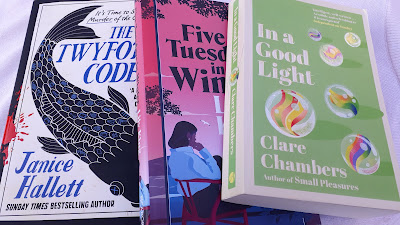
I was a bit disappointed with Janice Hallett's The Twyford Code. Shame because I loved her earlier novel The Appeal.  Not quite sure why I didn't like it but I got bored with the fish symbol appearing everywhere and I'm not that interested in acrostics.  I also didn't think she captured the working class voice of the central character whereas in The Appeal she brilliantly portrayed  an insular middle class community.

Lastly In a Good Light by Clare Chambers is a reread for me.  Along with another of her earlier novels Learning to Swim she perfectly captures what it is like to grow up in England in the 1970s and 80s.  One of my favourite writers. 

Thursday, 3 February 2022

Nomadland


Being human means yearning for more than subsistence. As much as food or shelter we require hope.  And there is hope on the road. It is a by-product of forward momentum. A sense of opportunity as wide as the country itself. A bone-deep conviction that something better will come.

Something about Jessica Bruder's Nomadland really captured my imagination.  I'm interested in the lives of drifters, hobos, transients and migrant workers - from the pioneers in Laura Ingalls Wilder's Little House on the Prairie to novels by Miriam Toews, Louise Erdrich and of course, John Steinbeck.

I haven't yet seen the film so all my perceptions are based on the book in which journalist Jessica Bruder spends a considerable amount of time travelling with nomads, absorbing their philosophy and attending their meetups including the famous Quartzsite in Arizona.  Some are forced onto the road for personal or economic reasons while others just prefer living off-grid.

The focus is on Linda May who became homeless in her 60's, lived for a while on her daughter's couch in an already overcrowded apartment before taking to the road with the reasoning. 'I'd rather be queen of my own house than live under the queen of someone else's house.'  On the road she finds many other nomads in their 50's, 60's even 70's.  Many survive on social security taking back-breaking seasonal work as camp hosts at forestry centres, Amazon warehouses or in sugar beet processing plants.

Bruder encounters camaraderie and cheerfulness but experiences how tough life is with RV breakdowns, freezing temperatures and work-related injuries a recurring problem. Many get through their Amazon Camperforce shifts on paracetamol and ibuprofen, walking for miles in the warehouses and getting repetitive strain injuries from the hand held scanners.

Bruder's time spent with nomads extends to working the same jobs.  In one episode both amusing and slightly chilling she works at an Amazon fulfilment centre where she is pursued by a robot loaded with patchouli oil and reeking of it.  

As well as the warmth of characters such as Linda May, Ghostdancer, and Swankie Wheels it is the quality of writing that makes this book so good.

See you down the road!

Thursday, 23 December 2021

The Amazing Mr Blunden

 A blackbird was calling, a single note repeated, a warning note; but she could not turn her head to look at him.  It was as if she were concentrating all her mind upon one thing but against her will. And upon something she did not understand. Then she sensed that there was something moving through the mist on the lawn, just beyond the pont at which her eyes were focused. She could not see very clearly, but it seemed to be two pale figures and they were moving towards her slowly and with purpose.

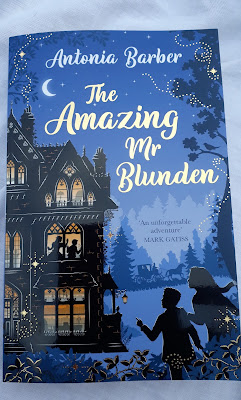
Antonia Barber's charming children's ghost story The Amazing Mr Blunden has been republished by Virago Modern Classics just in time for Christmas.  I think it holds its own among the best coming of age stories such as Rumer Godden's The Greengage Summer or Dodie Smith's I Capture the Castle.

Originally published in 1969 as The Ghosts it was made into a film and renamed The Amazing Mr Blunden in 1972.  If you had a 1970's childhood you may remember Diana Dors brilliant performance as the drunken Mrs Wickens.

Who are the boy and girl that Lucy and Jamie see walking in the garden of the old house?Surely just children who live nearby with eccentric parents who dress them in a Victorian style.  Why then do they have no shadow?  Who is the mysterious old solicitor called Mr Blunden who turns up at their home with a job offer for their cash-strapped mother?  Why does he speak like something out of David Copperfield and why are his clothes so dry despite walking through the streets of Camden Town in the pouring rain?

Can you move the Wheel of Time in time to put right a terrible mistake made over a hundred years ago?  Lucy and Jamie meet the ghostly Sara and her brother Georgie by the sundial near the round seat in the old garden and Sara tries to persuade Lucy and Jamie to travel back in time to help them:  'To you the people who lived before you were born are now dead but you are also dead to the people born after you.'

This warm-hearted and clever ghost story may be just the thing to read for a little Christmas magic.  

Wednesday, 22 September 2021

Clare Chambers


If only I hadn't gone back to the house on the day Lexi left; if only Anne Trevillion had been better at tennis; if only they hadn't taken on a new German teacher at my father's school thirty years ago.  Learning to Swim by Clare Chambers

Took a late summer trip to Covent Garden which was abloom with flower barrows and the city seems alive again after a long lockdown.  The book that accompanied me on the train was Learning to Swim by Clare Chambers which I absolutely loved.

You may have read her latest novel Small Pleasures set in the 1950's where a likeable female journalist investigates a suburban 'virgin birth'.  The success of Small Pleasures has resulted in the reissue of the earlier novels and I'm racing through them and must confess that I liked Learning to Swim even more!  Probably because it's a coming of age novel, my favourite genre, from modern classics such as A Greengage Summer and I Capture the Castle to Jane Eyre.

Clare Chambers has a light touch and I liked the opening where we first meet Abigail visiting her mother who is sorting photos from a cardboard box and muttering:

'Blurred, blurred, duplicate, awful bags under my eyes, don't know who that is.'

Abigail is in her early thirties and plays cello in an orchestra.  She has some difficulty crossing London by tube carrying a cello but makes it to her charity concert and runs into Marcus Radley a man she has not seen for thirteen years.  

 'We were both remembering the occasion of our last meeting: the heat in the chapel; the schoolgirl soprano breaking the last of us down; the windy graveside.'

From there the novel goes back to Abigail's early life.  A shy girl who is bullied at school finally finds a best friend and becomes besotted with her bohemian family.  My favourite part was when a teddy bear gets thrown in to the Thames!  

Having now read four of her novels I would say that Clare Chambers has something of the storytelling skill of Anne Tyler and the very English humour of Jilly Cooper.  Glad I still have two more to read. 

Saturday, 17 July 2021

The Appeal

This is amateur dramatics, not the RSC.
 
I took this smart and amusing murder mystery to Brighton last weekend and it was a great beach read with a highly original structure.  The story is relayed entirely in emails and WhatsApp messages yet still manages to have a bit of a Dorothy L Sayers classic crime feel.

Legal students Femi and Charlotte are handed six months' worth of email correspondence between a local amateur dramatics society and asked by their boss to look at it with a fresh perspective.   Some emails are missing, some irrelevant, some fail to deliver and some remain drafts.  Femi and Charlotte are given no background information but deduce that it is an ongoing legal case.

From the emails they learn that The Fairway Players have just staged a successful production of Blithe Spirit and are planning their next play when director Martin Hayward announces that his granddaughter Poppy has a cancer diagnosis.  Martin and wife Helen (leading lady) and his extended family appear to be queen bees in this group and the players and wider community begin a fundraising appeal called A Cure for Poppy.  However, sponsored runs, cake sales, charity football matches and Yogathons won't raise the required amount and more ambitious ways to raise money are considered.

Clever character portrayals emerge  - needy nurse Isabel, pushy former PR Sarah and my favourite - 23 year old Jackie who is 'currently travelling' and whose emails arrive from all over the world, always a step behind and giving away more than she may wish to.  There are also some highly amusing moments when their boss who is not tech-savvy tries to join the WhatsApp exchanges between Charlotte and Femi as they try to work out why someone dies and who is not as they appear to be.

This mystery also examines how a fundraising appeal can become heartlessly corporate  expecting people who work as tea ladies and nurses to stump up £10 for a raffle ticket or £80 to attend a ball.  The most moving email was from a man who donates to the Appeal for Poppy describing the loss of his own daughter and the impact it has had on him and his wife only to get an automatic Dear Donor reply telling him where to make his cheque payable to.

The Appeal by Janice Hallett is my reading highlight so far this year. Hope you enjoy it, too!

Saturday, 1 May 2021

Mary Lawson

She threw out a bottle of perfume the twins had given her for Christmas one year, the name of which - Ambush - had made her father laugh out loud ...

A new novel by Mary Lawson is always a pleasure. Like Anne Tyler she writes about families out of step with each other and her literary landscape is always Northern Ontario in Canada. I’m re-reading Mary Lawson’s three earlier novels before I start A Town Called Solace.

My favourite Road Ends was published in 2015 and its snowy setting is the fictional town of Struan.  The novel has a warm beating heart, largely in the form of Megan the eldest daughter of a mother who can’t stop having babies and then losing interest in them when they become children.  The eldest brother Tom is struggling to cope with the suicide of his friend and instead of using his degree he opts to drive the town snowplough.  Some of the most vibrant scenes in the novel are Tom struggling to get the ancient ‘headache yellow’ snowplough to start and then rumbling down the roads of Struan with ‘the new snow flying off the blade of the plough in a great soft arc.’

Megan has the household pretty much buttoned down, cooking, cleaning, laundry, organising her mother, keeping her younger brothers under control and loving and caring for her smallest brother Adam. It is when she decides to leave for London that this outwardly respectable but deeply troubled family start to fall apart. The dopey mother and wilfully blind father can’t seem address the benign neglect of little Adam but as Lawson weaves their narratives together you begin to understand the reasons for their behaviour.

Lawson is wonderful on the London of the late 1960s and 21 year old Megan’s experiences as an outsider in the world of Mick Jagger, bedsits, mini skirts, Carnaby Street and sexual freedom. I am looking forward to starting A Town Called Solace.

Anyone else vaguely remember a perfume by Dana called Ambush