Showing posts with label Elizabeth Jenkins. Show all posts

Saturday, 13 August 2011

Virago Modern Classics 2011

Sorry for late replies to comments on my last post but my computer - which was held together by little more than elastic bands and string - finally called it a day last month. As I've said before to me the internet is all about communication and to interact with other readers via comments is one of the greatest pleasures of book blogging. After re-reading the Rebecca West trilogy I found it difficult to settle down to reading anything else. Started The Moonstone by Wilkie Collins for book club but I prefer to read Victorian novels in the winter. Started The House of the Spirits by Isabel Allende, but within a few pages I knew it wasn't for me.

It was therefore very timely of Virago to re-issue five modern classics in hardback for the summer. Even better that they included Elizabeth Jenkins The Tortoise and the Hare which I've wanted to read ever since it was reviewed by Roses Over a Cottage Door, A few of my favourite books (now Lavender Tisane) Books and Chocolate and A Book Sanctuary

I loved this book. Although it is a sad story - beautiful woman who lives to please her wealthy husband cannot believe he is cheating on her with a dowdy spinster much older than herself - the writing and detail are beautiful with echoes of Jane Austen. There is also an excellent introduction by Hilary Mantel and an illuminating afterword by Carmen Callil. The cover design is Japanese Floral by Florence Broadhurst. A perfect summer read.

Friday, 11 March 2011

Sense and Sensibility 200th anniversary post (1)

Have you read Sense and Sensibility? It is a clever novel. They were full of it at Althorpe, and although it ends stupidly I was much amused by it. Letter from Lady Bessborough to Lord Granville Leveson-Gower, 1811

Elinor Dashwood is my favourite Austen heroine and each time I read Sense and Sensibility I discover something new about her. Austen was possessed of what Elizabeth Jenkins refers to as 'the occult power of creating human personality - the rarest form of literary genius.' Depth and nuance of character which may not be apparent on first reading an Austen novel are revealed upon re-reading.

Surprisingly, Elizabeth Jenkins was not fond of Elinor. She describes her as 'too rational.' I would argue the Elinor is the only character who keeps it together and retains a sense of humour despite almost unbearable provocation. Marianne falls to pieces when she is abandoned by Willoughby and it is Elinor who supports her while she is simultaneously aware that the man she loves is secretly engaged to the loathsome Lucy Steele who never misses an opportunity to remind her.

Yet when Marianne goes into raptures about autumn leaves, Elinor can dryly remark. 'It is not everyone who shares your passion for dead leaves.' When Lady Middleton's noisy, spoilt children pull their mother and damage her clothes, Elinor remarks that she 'never thinks of tame and quiet children with any abhorrence.'

Whether the novel ends 'stupidly' depends I suppose on your opinion of Edward Ferrars. I still find him a bit of a sap and think perhaps Colonel Brandon would have been a better match for Elinor.

I know you all have busy reading schedules but if anyone gets the time to re-read S&S this year I'd love to know your thoughts!

Wednesday, 23 February 2011

Mostly Jane

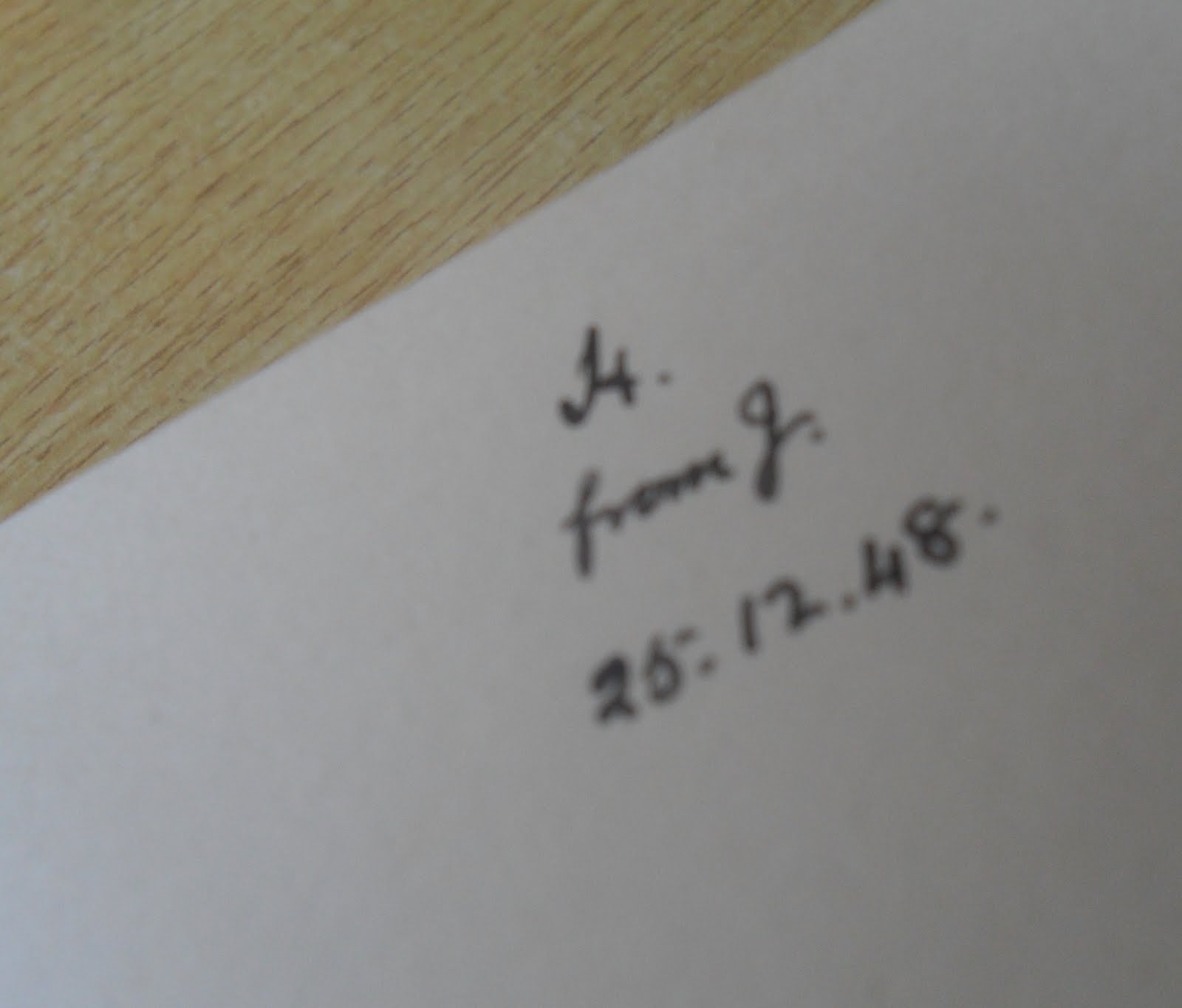
Found Jane Austen by Elizabeth Jenkins in my local second hand bookshop. I'm intrigued by the handwritten inscription and very much hope that "H" was fond of Austen and delighted to receive this book as a gift from "J" on Christmas Day, 1948.

While I think that Claire Tomalin's Jane Austen -A Life is the definitive Austen biography, Elizabeth Jenkins' uses her experience as a novelist to provide a unique insight into Austen's genius and her polished style makes this book a real pleasure to read.

When Jenkins' describes 'the brilliant perfection of Pride and Prejudice, sixteen years maturing in the mind of an unequalled artist' and the 'peculiar loveliness of Sense and Sensibility' it makes you want to immediately re-read them.

Talking of which, this year is the 200th anniversary of the publication of Sense and Sensibility. Anyone planning a re-read?