Monday, 18 April 2011

Catherine Morland

'Catherine grows quite a good-looking girl, - she is almost pretty today,' were words which caught her ears now and then; and how welcome were the sounds! To look almost pretty, is an acquisition of higher delight to a girl who has been looking plain the first fifteen years of her life, than a beauty from her cradle can ever receive. Jane Austen, Northanger Abbey

With the exception of Jane Eyre it is rare to find a literary heroine who is not beautiful. During her six-week sojourn in Bath, Catherine Morland a likeable and unremarkable girl who takes everything at face-value is rewarded with her man while the artful, the fashionable and the foolish are the victims of Austen's biting satire. Northanger Abbey also contains a delightful defence of the novel and novel readers (as if we needed one!)

The beauty on the cover of my Everyman's edition is Priscilla Jones, Wife of the Artist by Thomas Barker of Bath (1769-1847).

Friday, 8 April 2011

American Literature

I must stop buying these fancypants editions of literary classics because they are twice the price of standard paperbacks. It's the bookish equivalent of Carrie in Sex and the City when she spots another pair of Jimmy Choos!

Ethan Frome is a relentlessly tragic novel and portrays a completely different view of New England to Sarah Orne Jewett's The Country of the Pointed Firs. The tortured relationship between Ethan, his wife Zeena and the young Mattie Silver plays itself out to its shocking conclusion.

Talking of toxic marriages Shadow Tag is an unflinching portrayal of the relationship between Gil, an artist and his wife Irene who is also his muse. Both are flawed. He can't control his temper and she is a loving mother but a cold-hearted wife. Irene keeps a 'false' blue diary which she leaves around for her husband to read while her real thoughts are recorded in a secret red diary. Shadow Tag could not be considered a comfort read and this marriage turns uglier than most bad marriages with alcohol playing its inevitable part, but sometimes you need to read about real life, as it is, both good and bad and Louise Erdrich excels at writing real life.

After all that tragedy I need some Austen.

Wednesday, 30 March 2011

Shadow Tag

Waterstone's no longer seem to stock the latest Louise Erdrich titles. Plenty of shelf space for charmless celebrity biographies, but no space for a fine contemporary American writer. I suppose it is market driven. Here in the UK I have to order Erdrich's latest novels when I find out about them from blogger friends who are also fans, such as Frisbee Wind or from the website for Erdrich's bookshop Birchbark Books.

If you are new to this writer I would suggest starting with Love Medicine or, my favourite, The Beet Queen. Her novels are not for the faint-hearted - I don't mean that they are gruesome - I mean that many of them examine the harsh realities of life for those living on and around the reservations. Shadow Tag arrived last week and I started reading on Sunday night. Something nice about beginning a much-anticipated novel on a Sunday - kind of sets you up for the week!

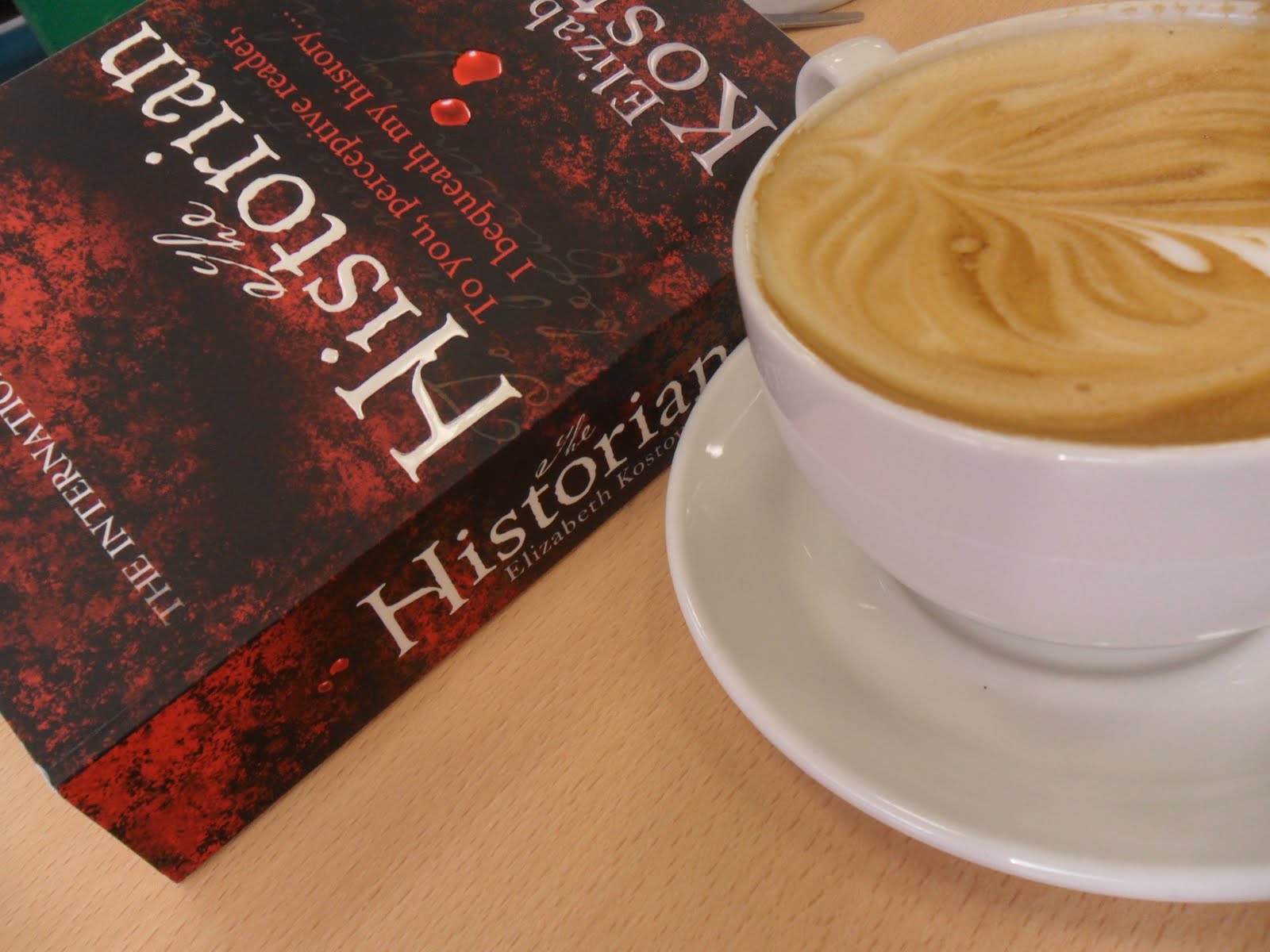
Finished The Historian. I thought it was very well-written but could have been edited by at least 200 pages for a sharper story. Too much travel and history and not enough character development for my tastes. That said, it genuinely made me jump a couple of times and there was some beautiful descriptive writing:
At farms along the road we stopped to buy picnics better than any restaurant could have made for us: boxes of new strawberries that gave off a red glow in the sun and seemed not to need washing; cylinders of goat's cheese weighty as barbells and encrusted with a rough grey mould as if they'd been rolled across a cellar floor.

Saturday, 19 March 2011

The Historian

About time I rejoined the 21st century for a while with a contemporary novel. I do like novels set in academia so I was pleased when my reading group chose Elizabeth Kostova's The Historian for March.

I was immediately drawn in by the opening of this novel. An ancient book mysteriously appears on a student's desk and reappears when he returns it to the rare books section of the university library. There there is the mysterious disappearance of the charismatic professor who had been researching the history of Dracula and only a smear of blood is left on the ceiling of his study. The papers and letters he leaves behind are all addressed to 'My dear and unfortunate successor.'

I'm only a couple of hundred pages in - this novel is 700 pages long(!) - but I'm enjoying the elegance of the writing. I'm not particularly interested in the legend and history of Dracula per se but so far the novel is holding my attention.

I was sorry to see that Jane Brocket is wavering about whether to continue her inspiring blog. I have to say that I've never found the book blogging community to be anything other than positive and mutually supportive. Possibly because reading is a non-competitive activity?

Friday, 11 March 2011

Sense and Sensibility 200th anniversary post (1)

Have you read Sense and Sensibility? It is a clever novel. They were full of it at Althorpe, and although it ends stupidly I was much amused by it. Letter from Lady Bessborough to Lord Granville Leveson-Gower, 1811

Elinor Dashwood is my favourite Austen heroine and each time I read Sense and Sensibility I discover something new about her. Austen was possessed of what Elizabeth Jenkins refers to as 'the occult power of creating human personality - the rarest form of literary genius.' Depth and nuance of character which may not be apparent on first reading an Austen novel are revealed upon re-reading.

Surprisingly, Elizabeth Jenkins was not fond of Elinor. She describes her as 'too rational.' I would argue the Elinor is the only character who keeps it together and retains a sense of humour despite almost unbearable provocation. Marianne falls to pieces when she is abandoned by Willoughby and it is Elinor who supports her while she is simultaneously aware that the man she loves is secretly engaged to the loathsome Lucy Steele who never misses an opportunity to remind her.

Yet when Marianne goes into raptures about autumn leaves, Elinor can dryly remark. 'It is not everyone who shares your passion for dead leaves.' When Lady Middleton's noisy, spoilt children pull their mother and damage her clothes, Elinor remarks that she 'never thinks of tame and quiet children with any abhorrence.'

Whether the novel ends 'stupidly' depends I suppose on your opinion of Edward Ferrars. I still find him a bit of a sap and think perhaps Colonel Brandon would have been a better match for Elinor.

I know you all have busy reading schedules but if anyone gets the time to re-read S&S this year I'd love to know your thoughts!

Wednesday, 23 February 2011

Mostly Jane

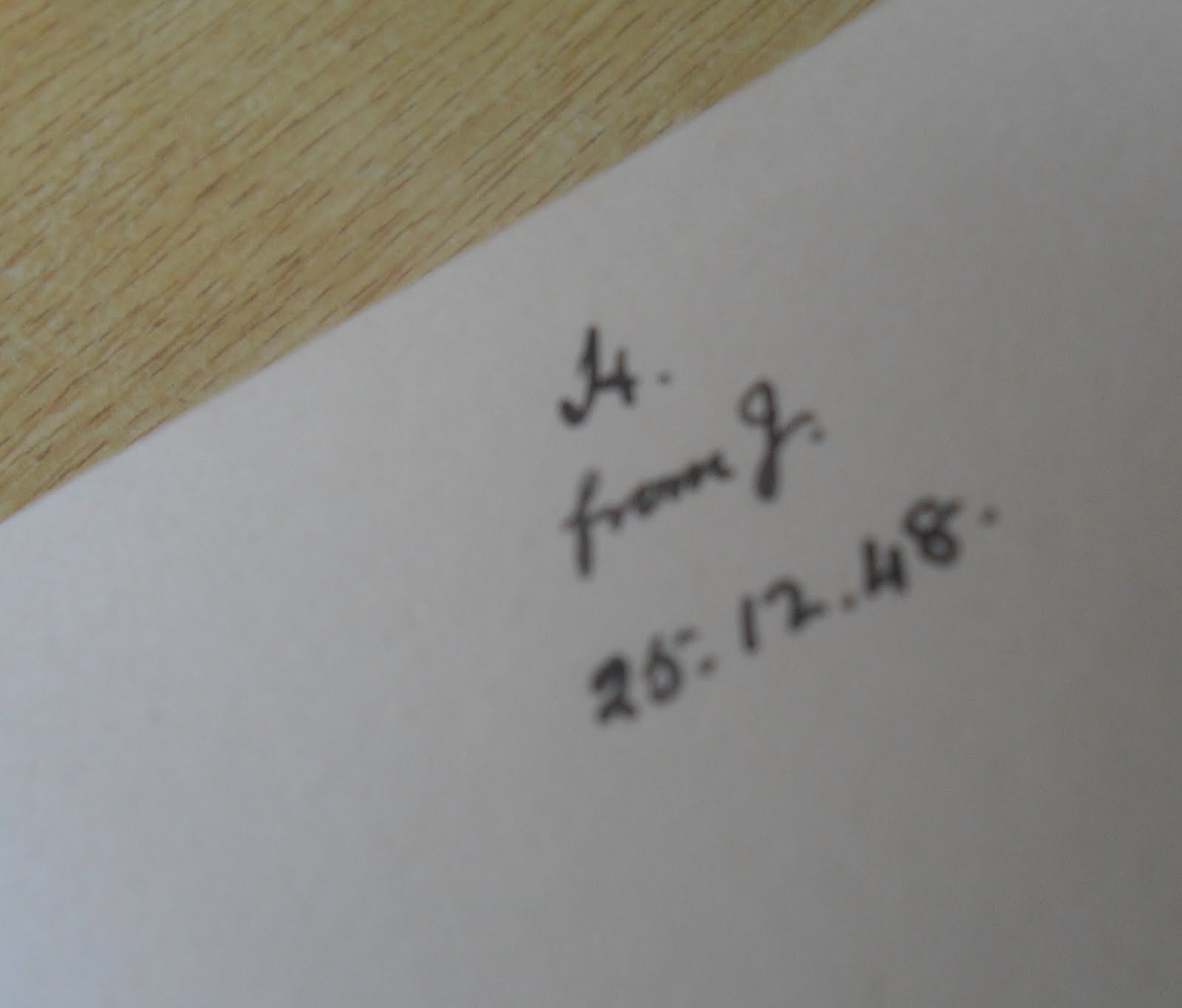
Found Jane Austen by Elizabeth Jenkins in my local second hand bookshop. I'm intrigued by the handwritten inscription and very much hope that "H" was fond of Austen and delighted to receive this book as a gift from "J" on Christmas Day, 1948.

While I think that Claire Tomalin's Jane Austen -A Life is the definitive Austen biography, Elizabeth Jenkins' uses her experience as a novelist to provide a unique insight into Austen's genius and her polished style makes this book a real pleasure to read.

When Jenkins' describes 'the brilliant perfection of Pride and Prejudice, sixteen years maturing in the mind of an unequalled artist' and the 'peculiar loveliness of Sense and Sensibility' it makes you want to immediately re-read them.

Talking of which, this year is the 200th anniversary of the publication of Sense and Sensibility. Anyone planning a re-read?

Sunday, 13 February 2011

North and South

Described by Jenny Uglow as 'sexy, vivid and full of suspense' North and South is a compelling novel with magnetic central characters.

Margaret Hale's father has a crisis of faith and removes his family from their beloved New Forest to Milton, a manufacturing town in Manchester. Dismayed by the smoky industrial landscape Margaret's mother becomes ill. Her father takes in students and one of them is the powerful cotton-mill owner John Thornton.

Hypnotised by Margaret's dark beauty, dignity and scornful disdain of capitalism he falls in love with her. Margaret befriends a local girl, Bessy, who is dying as a consequence of breathing in the dust when she worked at the cotton mills:
'Fluff,' repeated Bessy. 'Little bits as fly off fro' the cotton, when they're carding it, and fill the air till it looks all fine white dust. They say it winds round the lungs and tightens them up. Anyhow there's many a one as works in the carding room, that falls in a waste, coughing and spitting blood, because they're just poisoned by the fluff.'
After Margaret protects him during a riot by the workers on strike and is injured in the process, Thornton declares his love and is refused. Her mother succumbs and dies, so does Bessy and suddenly Margaret's father. (Charles Dickens once said that much as he admires Elizabeth Gaskell he wished her characters were a little more steady on their feet!)

During this time, Thornton begins to doubt Margaret's virtue after he sees her walking out after dusk with a young man (who turns out to be her brother, but that's another story.) Margaret's stoicism and compassion see her through and after some clever plot twists she comes to appreciate the true value of the man she once disdained and the industrial town she once disliked.

Thank you so much to Make Do and Read, Shelf Love, A Few of My Favourite Books, Potter Jotter, Lilacs in May and Iris on Books for recommending this marvellous novel and I very much enjoyed this post about Victorian embroidery and art by Jane Brocket.