Friday, 28 January 2011

Azkaban

Get too near a Dementor and every good feeling, every happy memory will be sucked out of you. Remus Lupin
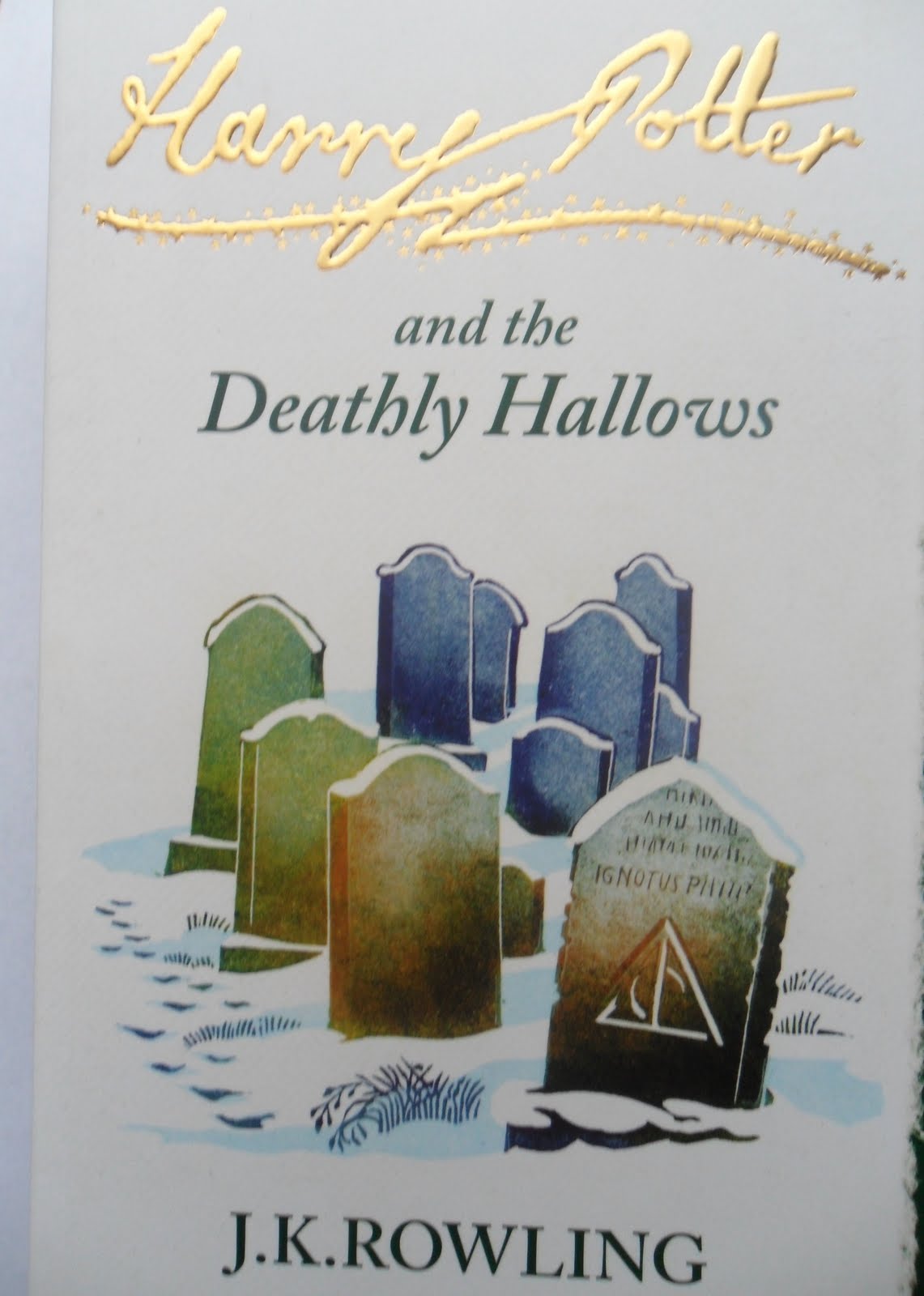
I'm collecting these handsome new editions of the Harry Potter series for my daughters and I couldn't resist a quick re-read of my favourite Harry Potter and the Prisoner of Azkaban. I believe that the evil hooded Dementors and the way they operate - sucking all positive thoughts from the body - are based on J K Rowling's own experiences of post-natal depression. Evidence, if it were needed, of the sophistication of her writing and how it can appeal on many levels.

I was reading a transcript of JK's interview with Oprah and I was struck by her comment 'writing is essential for my mental health.' Now I don't write but I do believe that reading is essential for my mental health. Browsing through book blogs I suspect that the same is true for others - we don't read as a hobby, we read as an essential part of our well-being. I'd be interested in your thoughts whether you read, write, create, craft or bake.

Friday, 14 January 2011

Coquelicot

'Do you know, I saw the prettiest hat you can imagine, in a shop window in Milsom Street just now - very like yours, only with coquelicot ribbons instead of green; I quite longed for it.' Isabella, Northanger Abbey
I've been reading Susannah Carson's collection of essays on Jane Austen and some of the selected letters. I've been fascinated with all the detail about fabrics and dress-making. In a letter to Cassandra dated 1798, Austen describes a hat she is customising and her intentions to replace the black feather with a coquelicot one 'and besides coquelicot is to be all the fashion this winter.'

Coquelicot was one of the fashionable Regency colours - a bright orange-red like a poppy. I love the fact that Austen was interested in clothes and fashion and I've learned that persian was used to line dresses, sarsenet is a fine soft silk and cambric is a white linen. Who knew?!

Monday, 3 January 2011

Oh, Mr Knightley

I've been re-reading Emma and dipping into A Truth Universally Acknowledged, a collection of essays edited by Susannah Carson. Alain de Botton's thoughts on Austen's novels strike me as particularly perceptive:
These are books that speak to us of our own lives with a clarity we cannot match.
Thus Jane Fairfax's secret smile of delight at the new pianoforte, Frank Churchill's laughingly spelling out the word BLUNDER in the alphabet game and Mr Knightley's glorious 'if I loved you less, I might be able to talk about it more' speech to Emma could all be happening right now.
Happy New Year!

Saturday, 25 December 2010

More Elizabeth Bowen

After her mother's death 16-year old Portia is sent to London to live with her half-brother Thomas and his wife, Anna. They have a beautiful house overlooking Regent's Park and Matchett, the housekeeper, has been with the family for many years and rules the household. Portia is naive and child-like and finds the glamorous Anna and her home imposing and intimidating. When an 'unsuitable' young man takes an interest in Portia she is sent to stay by the sea.

Bowen is wonderful at leaving things unsaid. Although The Death of the Heart is the story of Portia it is Anna who dominates the novel and is by far the most interesting character. I particularly enjoyed the account of her reading extracts from Portia's diary and the Mrs Danvers-like Matchett accompanying Portia to school through a London fog and insisting that she keeps her scarf wrapped around her face and not to swallow any!

I've bought To the North because I plan to read more Elizabeth Bowen but not right now. Sometimes, only Austen will do!

Sunday, 12 December 2010

Elizabeth Bowen

There was a smell of freesias and sandalwood: it was nice to be in from the cold park.
A man and woman meet in Regent's Park in frosty midwinter. Clad in furs and deep in conversation they pause on the icy footbridge. When the intense cold becomes unbearable and dusk falls they make their way back through the inch of park gate which has been left open for them.

Elizabeth Bowen's novel The Death of the Heart opens with a wonderful wintry London setting. Bowen is another writer I've been meaning to read this year and I've a couple of weeks left to do it in! I'd be interested in other recommendations for her novels. Justine Picardie's post earlier this year made me want to read this one.

Sunday, 5 December 2010

Wives and Daughters

Can't say I'm enjoying the Radio 4 adaption of Wives and Daughters. Something about those arch actressy voices gets on my nerves. Did the Victorians really speak like that? I did enjoy listening to Jenny Uglow talking about Elizabeth Gaskell on Woman's Hour though, and as she pointed out, the fact that the novel is unfinished does not detract from our enjoyment of it.

I'd always vaguely thought of Gaskell's novels as 'industrial' and consequently avoided them, but reading Cranford a couple of years ago opened my eyes to a warmly humourous writer with a deeply perceptive knowledge of human nature.

Wives and Daughters is a coming of age story and follows the life of Molly Gibson from a child to a woman of nineteen. Molly is the daughter of the local surgeon, a widower. When he re-marries Molly does not get on with her stepmother, a woman only concerned with keeping up appearances, but adores her new step-sister, Cynthia. Molly is a deeply moral girl with fierce loyalties to her father and friends, but it is in the portrayal of the sarcastic Cynthia and her mother that Gaskell really excels.

I'm pretty sure Gaskell was influenced by Maria Edgeworth and she actually mentions Edgeworth in Wives and Daughters. Now there's a topic for a dissertation ... if only I was a student again!

Sunday, 28 November 2010

More Elizabeth Gaskell

My photos may give the impression that I spend all my time sitting in Costa* reading, but I have a family and work Mon-Thurs. Friday is my day off and that is the day I like to lounge around reading, then saunter into town and browse the bookshops and sit in a coffee shop and read a bit more before the onset of the weekend.

Which is a roundabout way of saying that I still haven't finished the 600+ pages of Wives and Daughters. I'm about half-way through and I can understand why Charles Dickens referred to Elizabeth Gaskell as a 'bewitching Scheherazade'. I've also borrowed Jenny Uglow's biography of Gaskell from the library. Not to read cover to cover as I prefer to read fiction but I want to dip into it and discover a little more about her life.

* ... and Costa needs to watch out! Anymore "Would I like a muffin with that or how about a Costa loyalty card?" and I may take my considerable coffee drinking capacity elsewhere!